
Voters in Illinois will head to the polls today to cast their ballots in statewide and countywide races. Also up for grabs in Illinois are 17 seats in the U.S. Congress and a rare open U.S. Senate seat. Locally, the Chicago Board of Education will become fully elected for the first time. Nationally, control of the U.S. Senate and U.S. House is at stake. Follow along all day for live news and results.
10 p.m., Chicago
Election Night is wrapping up in Illinois and nationwide as the polls are officially closed just about everywhere.
While votes are still being counted in some key races, Gov. JB Pritzker and U.S. Sen.-elect Juliana Stratton secured early victories.
The suspected “blue wave” seems to be coming to fruition as voters express concerns about affordability, immigration enforcement and the Iran War at the polls.
Joining “Chicago Tonight” is Connie Mixon, a political science professor at Elmhurst University.
-Jessica Watts, WTTW News
Ramova Theatre, Chicago, 7:24 p.m.
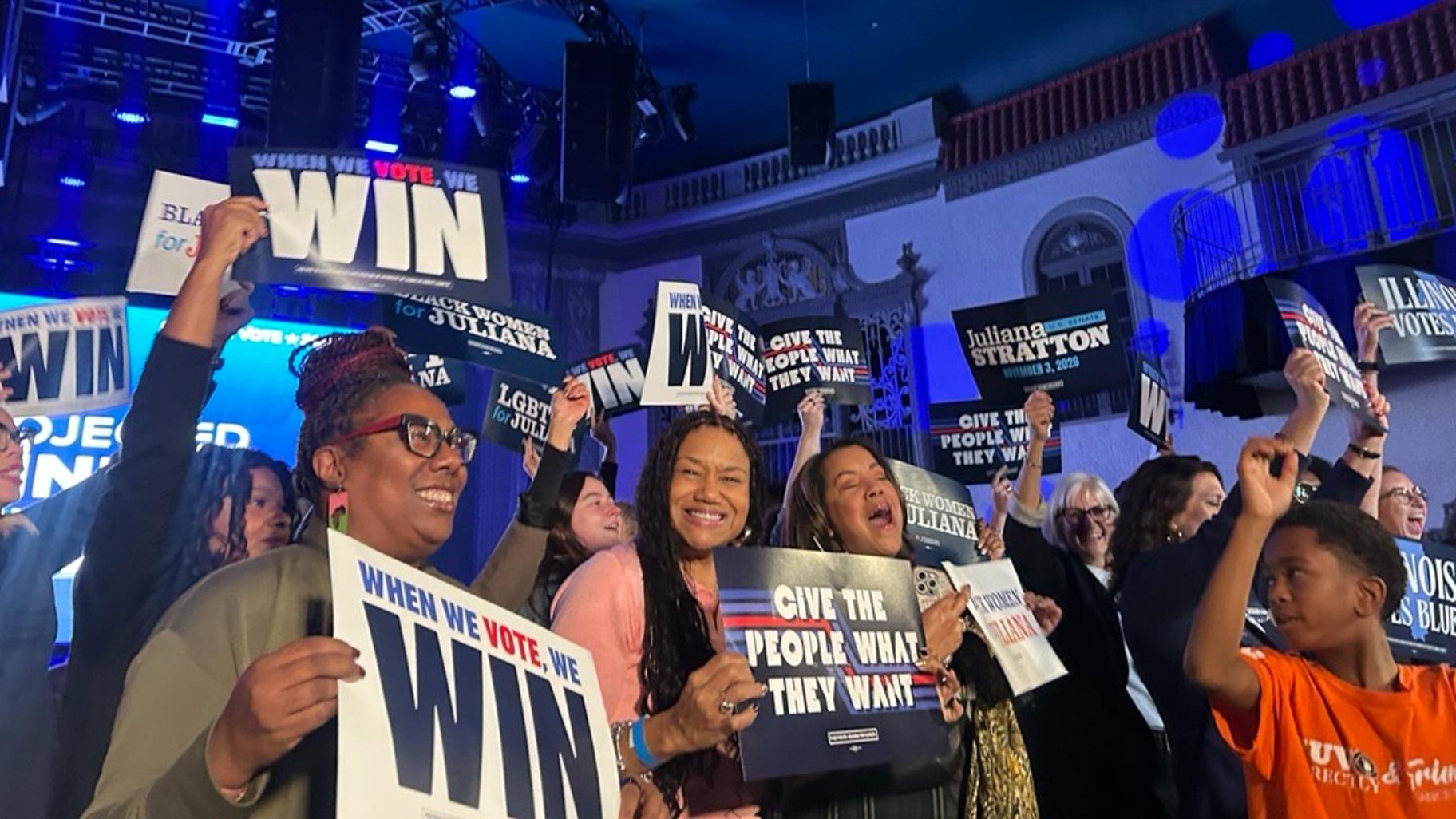
Juliana Stratton, the former Illinois state representative and current lieutenant governor, will become just the sixth Black woman to serve in the U.S. Senate following her historic victory in Tuesday’s election.
The Associated Press called the race for Stratton, who won a rare open seat in a contest that will reshape Illinois politics, cruising to victory over Republican challenger Don Tracy and independent Whitfield Harrington Jr.
The race was called immediately after polls closed across Illinois. The gathered crowd at Stratton’s election watch party inside the Ramova Theatre in Bridgeport burst into applause just seconds after 7 p.m.
She will replace retiring U.S. Sen. Dick Durbin, who will end his political career in January after 30 years in the Senate.
Stratton, boosted by her alliance with Gov. JB Pritzker, won the Democratic nomination in March after promising to aggressively confront President Donald Trump. Read the full story.
-Matt Masterson and Blair Paddock, WTTW News
Navy Pier, Chicago, 7:23 p.m.
Democratic Gov. JB Pritzker’s was declared the winner in his bid for a rare third term as Illinois governor, a race that saw him in a rematch with former Republican state lawmaker Darren Bailey, according to the Associated Press.
The call was made immediately after polls closed at 7 p.m. in Illinois.
Pritzker, widely viewed as an entrant in the 2028 presidential primary, has made his opposition to President Donald Trump a key feature of his governorship and his third candidacy. Conversely, Bailey, who eagerly accepted Trump’s endorsement in 2022, has walked the tightrope of distancing himself from the unpopular president and courting northeastern Illinois voters likely hostile to Trump while still maintaining his Republican bona fides. Read the full story.
-Nick Blumberg, WTTW News
5:30 p.m., Chicago
This year’s midterms have made history as the most expensive U.S. election cycle ever.
Several nearby states including Michigan, Iowa and Ohio are expecting tight U.S. Senate contests that could determine which party controls that chamber. And in Illinois, Democrats in statewide races are expected to continue their stronghold on state government.
Joining “Chicago Tonight” is Connie Mixon, a political science professor at Elmhurst University.
-Jessica Watts, WTTW News
5:30 p.m., Bridgeport
Dovile Cather joined WTTW News reporter Matt Masterson at the Ramova Theatre in Bridgeport, where U.S. Senate candidate Juliana Stratton and other Democrats were getting ready for an Election Night event.
Stratton is facing Republican Don Tracy and third-party candidate Whitfield Harrington Jr. in the race to replace retiring U.S. Sen. Dick Durbin.
-WTTW News
5:30 p.m., Navy Pier
Anne Caprara joined WTTW News correspondent Nick Blumberg at Gov. JB Pritzker’s Election Night event at Navy Pier. Pritzker is seeking a third term, running against Republican Darren Bailey and independent Collin Corbett.
-WTTW News
3:27 p.m., Chicago
A spokesperson from the Chicago Board of Elections reported a shortage of ballots at multiple locations on Election Day. One location was the 4th precinct of the 1st Ward. The spokesperson reported voters were using touch screens, and it was slowing down the process. Some voters were sent to nearby locations that were formerly early voting centers.
The board was investigating the cause of the ballot shortages, noting the delays appeared to be happening in some precincts that were split in different legislative districts. Read more.
-Jared Rutecki, WTTW News
3 p.m., Chicago
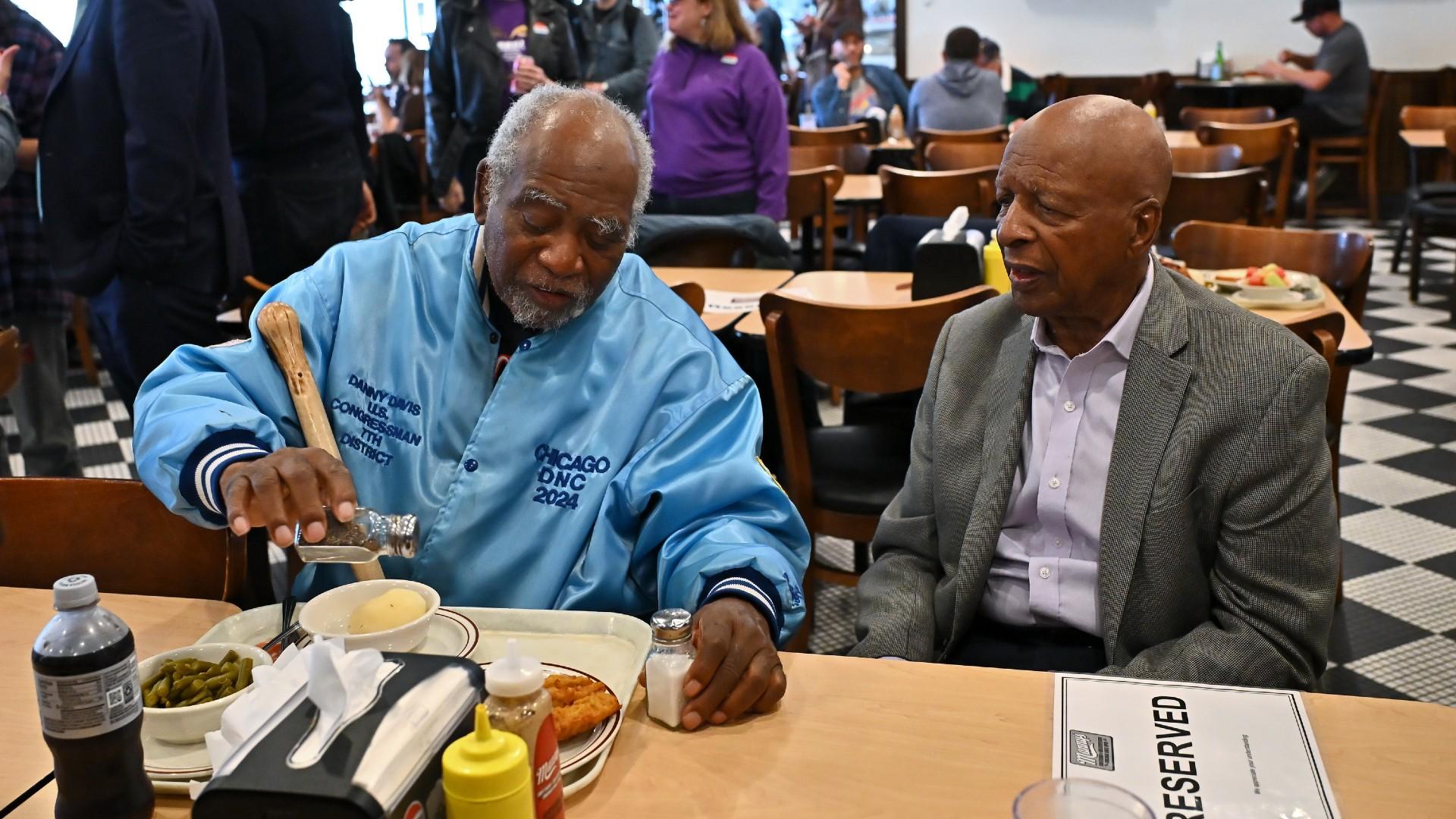
It wouldn’t be Election Day in Chicago without politicians packed shoulder to shoulder at Manny’s Cafeteria & Delicatessen.
Carrying trays of corned beef and pastrami sandwiches, the lunch time rush on Tuesday saw soon-to-be-retired U.S. Sen. Dick Durbin, U.S. Sen. Tammy Duckworth and Gov. JB Pritzker among the many politicos.
Scroll through the photo gallery to get a look at the scene.
-Victor Hilitski, WTTW News
1:05 p.m.
If Republicans lose ground in Congress, it won’t be because they didn’t have more money than Democrats.
Republicans have held a financial advantage leading up to the midterm elections, owing to GOP-aligned outside groups’ outsized role, notably in Senate races.
Combined, the Republican National Committee, its related congressional committees and corresponding super PACs, including Trump’s MAGA Inc., raised more than $2.2 billion, compared with about $1.3 billion for the Democratic National Committee and its aligned committees and groups.
Democratic candidates, however, have outraised Republicans in their individual races, more than $2.3 billion to about $1.6 billion. That money goes further than super PAC dollars because candidates get lower advertising rates.
The two sides have spent an astronomical amount on the midterm campaigns — more than $11.9 billion, according to Federal Election Commission records. The vast majority of spending has been on advertising: Republicans and allied groups have spent more than $5.5 billion while Democrats and allied groups have spent a little more than $5 billion, according to the media-tracking firm AdImpact.
-Associated Press
Chicago, 12:30 p.m.
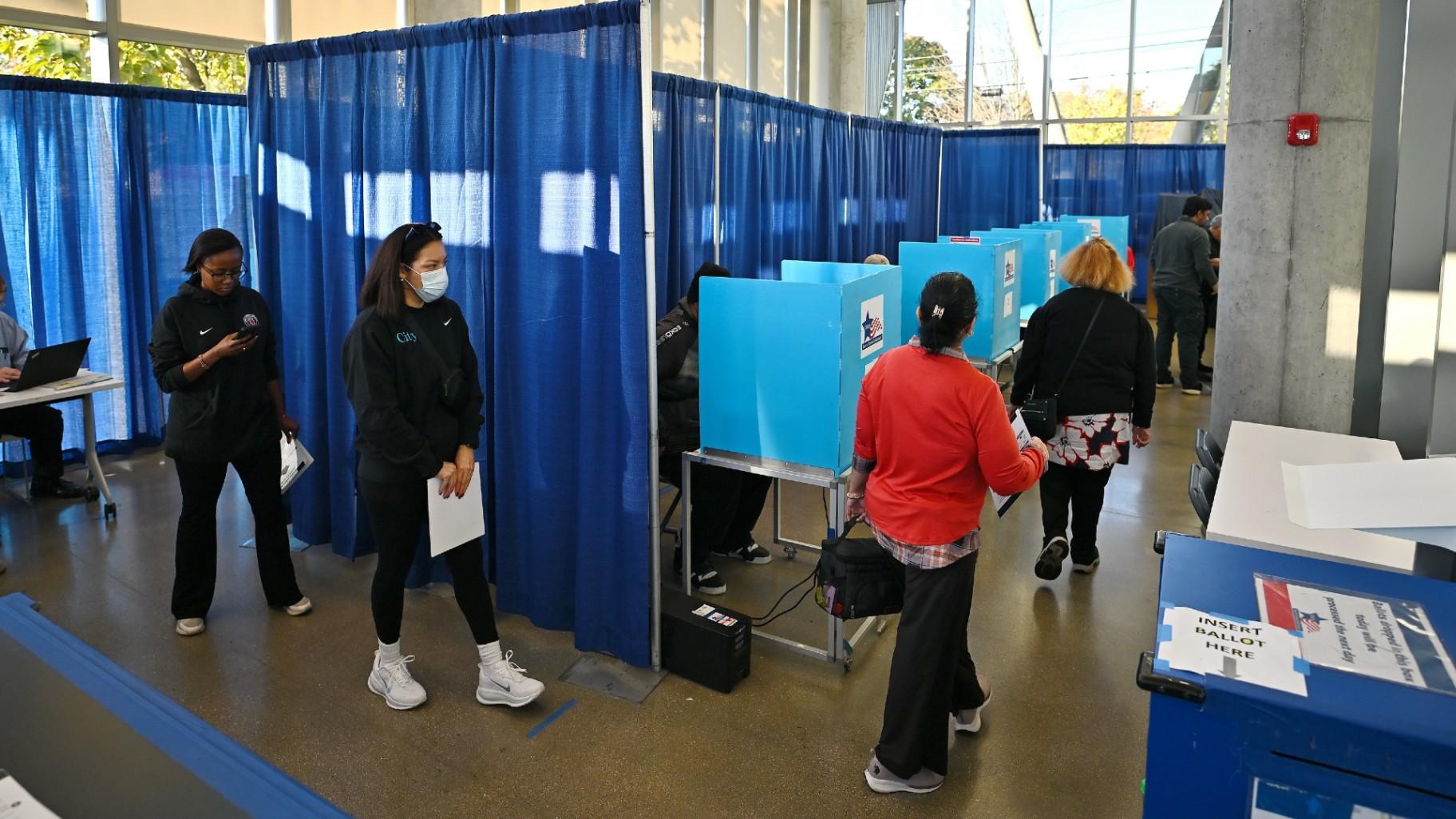
Polls remain open across Chicago until 7 p.m. Tuesday as voters head to the ballot box after weeks of campaign advertisements and outreach efforts ahead of Election Day.
Presidential elections typically drive higher turnout than midterms. However, a combination of factors from the economy to the actions of federal immigration agents have potential to drive more people to the polls in 2026.
City turnout on Tuesday was closing in on 117,000 voters at 11 a.m., according to a spokesperson from the Chicago Board of Elections.
The spokesperson reported a shortage of ballots at at least one voting location this morning. In the 4th precinct of the 1st Ward, the spokesperson reported voters were using touch screens, and it was slowing down the process. Some voters were sent to nearby locations that were formerly early voting centers.
Voter turnout in suburban Cook County appeared strong, with more than 250,000 residents casting ballots through early voting as of Monday afternoon, according to the Cook County clerk’s office. Nearly 107,000 vote-by-mail ballots had also been returned, with about 11,000 more in the mail.
The presence of federal election monitors from the U.S. Department of Justice were also confirmed by the spokesperson, who said the monitors work in pairs. The Board of Elections had not received any reports about the monitors, according to the spokesperson.
Figures from the board show that as of Monday night, 211,657 early voting ballots had been cast at the ward and downtown early voting locations across Chicago. There were 109,215 vote-by-mail ballots cast, about 45% of the total, as of Monday. The board reported more than 1,500,000 registered voters in Chicago. Read more.
-Jared Rutecki and Patty Wetli, WTTW News
Midterm elections generally favor the party that doesn’t hold the White House, but the two most recent cycles generated a mixed result.
When Joe Biden was president, Republicans won control of the House in 2022, picking up nine seats and assuming a slim majority. But Democrats maintained control of the Senate and even picked up a seat in the chamber.
A similar dynamic occurred during Trump’s first term, though the gains were much larger for Democrats in the House. They netted 40 seats in the 2018 midterms and took the majority for the first time in eight years. Still, Republicans expanded their Senate majority by two seats.
Some analysts see similarities between this midterm political environment and that of 2006, when President George W. Bush and Republicans faced headwinds from high fuel prices and the war in Iraq. That year, Democrats added 30 House seats and six Senate seats to take the majority in both chambers.
-Associated Press
Washington, 9:20 a.m.
The Department of Justice announced Tuesday morning it would send election monitors to jurisdictions spread out across all 50 states, including Chicago and Cook County.
This announcement expands the list of jurisdictions expecting election monitors, which previously included Lake and Marion counties in Indiana.
Monitors will be observing compliance with federal voting rights statutes, according to the DOJ statement. DOJ officials previously told Lake County, Indiana, officials that plain clothes monitors would conduct voluntary exit interviews outside of polling locations focused on language barriers, disability access and provisional ballots.
“In the past (DOJ election monitors) were used to prevent racial discrimination. It was making sure that states were not having poll taxes, or anything else that made people of color feel any certain way about voting,” Emily Shrock, senior counsel at the Chicago Lawyers’ Committee for Civil Rights told WTTW News on Monday night before today’s announcement expanding the monitoring to Illinois.
“Unfortunately, we are seeing a bit of a chilling effect just by them being present because of the current administration’s decisions regarding the Department of Justice,” Shrock said on Monday.
Several voting rights organizations have trained nonpartisan poll watchers to observe polls Tuesday as an effort to stymie potential voter intimidation, as well as monitor an election protection hotline. Separately, the Chicago U.S. Attorney Andrew Boutros previously announced a different hotline to report voter fraud and intimidation.
-Andrew Montequin, WTTW News
6 a.m., Chicago
WTTW News’ Voter Guide is your one-stop shop for everything you need to know before voting in the 2026 Illinois general election with information on statewide, Cook County and Chicago races. You’ll find candidate profiles that include detailed, issue-based questionnaires and links to more information.
Our Voter Toolbox is the place to go for information on how to vote early, where to vote and all the things you need to know about Election Day. We also pulled together the latest election and political coverage from our WTTW News team. Visit the full guide for help filling out your ballot.
6 a.m., Chicago
For decades, Chicago has been the only city in Illinois with its board of education handpicked by its mayor much to the chagrin of education advocates who’ve long called for the board to be an elected body.
This fall, those advocates finally get their wish. It’s off to the races.
In the November general election, for the first time ever, all 21 seats on the board will be up for grabs, ending a reign of mayoral control that dates back to 1995 under Richard M. Daley. So how will the next round of elections play out? We explain how it works.
-Matt Masterson, WTTW News
6 a.m., Nov. 3
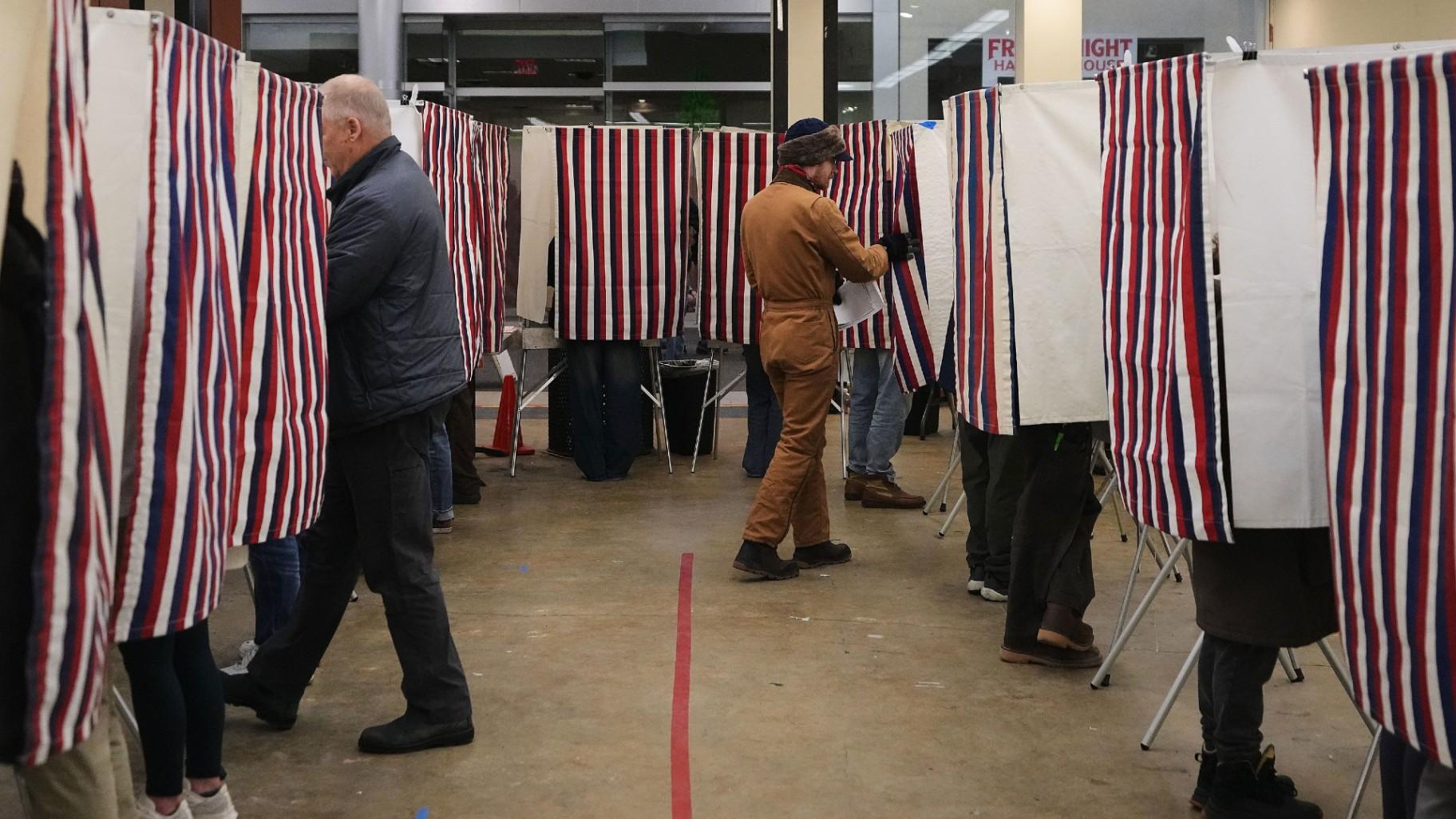
Can the polls be trusted? It depends on what you’re trusting them to do.
Even the most carefully conducted polls are imprecise snapshots of public opinion, not precision instruments — and when they’re pressed into predictive tools, they don’t always get it right. But while surveys can’t provide an unambiguous answer on who’s ahead in tight races, they often do paint a clear and important picture of the political landscape.
The contours of some findings are sharply drawn enough to be visible even through the shadows of potential polling error. Poll after poll has found President Donald Trump’s approval rating in the mid-to-low-30s nationally. Surveys also show a broad consensus that Americans, shaken by cost-of-living concerns, largely take a dim view of the economy and Trump’s stewardship of it; that there’s little enthusiasm in any corner about the current state of the nation; and that voters are overwhelmingly looking for change — even if they may not all agree on precisely what that change should look like. Read more.
-CNN
7:20 p.m., Nov. 2, Chicago
Election Day is Tuesday, and many voters are still wondering what to expect when they go to the polls. Last month, the U.S. Department of Justice announced plans to send election monitors to polling places around the country. Meanwhile, rumors are swirling about the possibility of immigration or other federal agents showing up.
But local voting rights advocates are still hoping for a “boring” Election Day. “We’re prepared for whatever comes our way. We hope that we are prepared for a very boring Election Day tomorrow,” said Christina Beeler, senior counsel at Chicago Lawyers’ Committee for Civil Rights (CLCCR).
Beeler said federal law prohibits voter intimidation and federal agents going to polling places. Some organizations have already preemptively challenged the deployment of federal agents at the polls. Read more.
-Andrew Montequin, WTTW News


